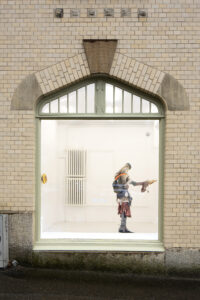
Olof Marsja, The Nameless One installation view.
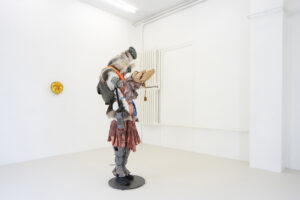
Olof Marsja, The Nameless One installation view.
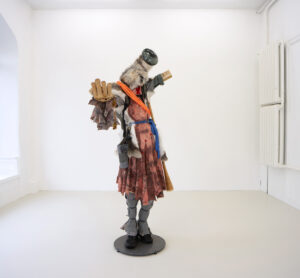
Olof Marsja, The Nameless One, 2026 (Alder, oak, walnut, silvered glass, glass, plastic beads, plastic toy, natural dyed curtain fabric, felt fabric, grey t-shirt, unknown army shirt, sweatpants, denim trousers, cable tie, ratchet strap, Nike Gore-Tex sneakers, reindeer fur, steel, jesmonite, dried porcino, foam rubber, bluetooth speaker, synthetic lasso, birch trumpet, 1646 socks, Cora Hillebrand patch, Jack Wolfskin backpack, green finch head, brass and stainless steel rings, 210 x 84 x 126 cm).
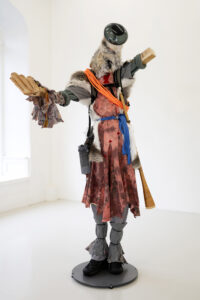
Olof Marsja, The Nameless One, 2026 (Alder, oak, walnut, silvered glass, glass, plastic beads, plastic toy, natural dyed curtain fabric, felt fabric, grey t-shirt, unknown army shirt, sweatpants, denim trousers, cable tie, ratchet strap, Nike Gore-Tex sneakers, reindeer fur, steel, jesmonite, dried porcino, foam rubber, bluetooth speaker, synthetic lasso, birch trumpet, 1646 socks, Cora Hillebrand patch, Jack Wolfskin backpack, green finch head, brass and stainless steel rings, 210 x 84 x 126 cm).
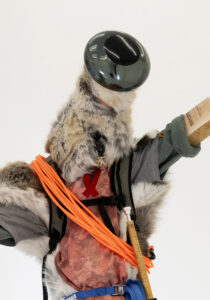
Olof Marsja, The Nameless One (detail), 2026 (Alder, oak, walnut, silvered glass, glass, plastic beads, plastic toy, natural dyed curtain fabric, felt fabric, grey t-shirt, unknown army shirt, sweatpants, denim trousers, cable tie, ratchet strap, Nike Gore-Tex sneakers, reindeer fur, steel, jesmonite, dried porcino, foam rubber, bluetooth speaker, synthetic lasso, birch trumpet, 1646 socks, Cora Hillebrand patch, Jack Wolfskin backpack, green finch head, brass and stainless steel rings, 210 x 84 x 126 cm).
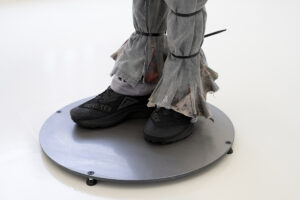
Olof Marsja, The Nameless One (detail), 2026 (Alder, oak, walnut, silvered glass, glass, plastic beads, plastic toy, natural dyed curtain fabric, felt fabric, grey t-shirt, unknown army shirt, sweatpants, denim trousers, cable tie, ratchet strap, Nike Gore-Tex sneakers, reindeer fur, steel, jesmonite, dried porcino, foam rubber, bluetooth speaker, synthetic lasso, birch trumpet, 1646 socks, Cora Hillebrand patch, Jack Wolfskin backpack, green finch head, brass and stainless steel rings, 210 x 84 x 126 cm).
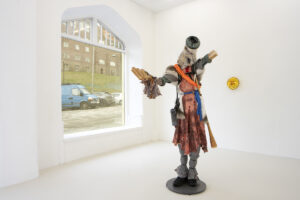
Olof Marsja, The Nameless One installation view.
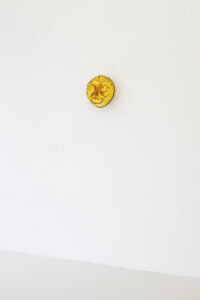
Olof Marsja, Sun Mask, 2026 (Silvered glass, aluminium, 30 x 29 x 16 cm).
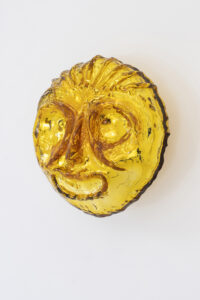
Olof Marsja, Sun Mask, 2026 (Silvered glass, aluminium, 30 x 29 x 16 cm).
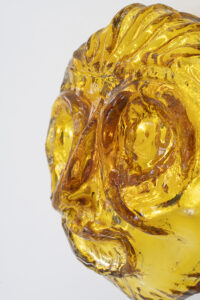
Olof Marsja, Sun Mask (detail), 2026 (Silvered glass, aluminium, 30 x 29 x 16 cm).
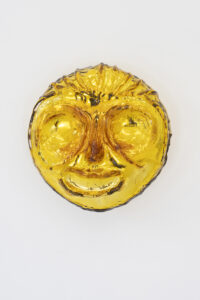
Olof Marsja, Sun Mask, 2026 (Silvered glass, aluminium, 30 x 29 x 16 cm).
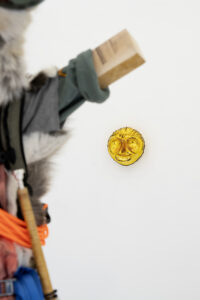
Olof Marsja, The Nameless One installation view.
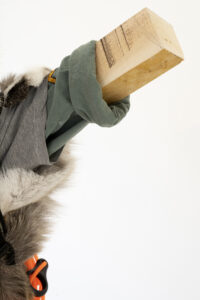
Olof Marsja, The Nameless One (detail), 2026 (Alder, oak, walnut, silvered glass, glass, plastic beads, plastic toy, natural dyed curtain fabric, felt fabric, grey t-shirt, unknown army shirt, sweatpants, denim trousers, cable tie, ratchet strap, Nike Gore-Tex sneakers, reindeer fur, steel, jesmonite, dried porcino, foam rubber, bluetooth speaker, synthetic lasso, birch trumpet, 1646 socks, Cora Hillebrand patch, Jack Wolfskin backpack, green finch head, brass and stainless steel rings, 210 x 84 x 126 cm).
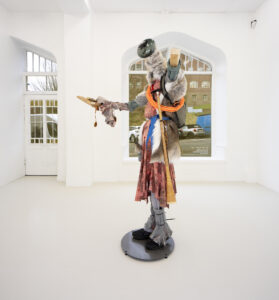
Olof Marsja, The Nameless One, 2026 (Alder, oak, walnut, silvered glass, glass, plastic beads, plastic toy, natural dyed curtain fabric, felt fabric, grey t-shirt, unknown army shirt, sweatpants, denim trousers, cable tie, ratchet strap, Nike Gore-Tex sneakers, reindeer fur, steel, jesmonite, dried porcino, foam rubber, bluetooth speaker, synthetic lasso, birch trumpet, 1646 socks, Cora Hillebrand patch, Jack Wolfskin backpack, green finch head, brass and stainless steel rings, 210 x 84 x 126 cm).
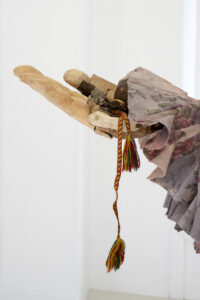
Olof Marsja, The Nameless One (detail), 2026 (Alder, oak, walnut, silvered glass, glass, plastic beads, plastic toy, natural dyed curtain fabric, felt fabric, grey t-shirt, unknown army shirt, sweatpants, denim trousers, cable tie, ratchet strap, Nike Gore-Tex sneakers, reindeer fur, steel, jesmonite, dried porcino, foam rubber, bluetooth speaker, synthetic lasso, birch trumpet, 1646 socks, Cora Hillebrand patch, Jack Wolfskin backpack, green finch head, brass and stainless steel rings, 210 x 84 x 126 cm).
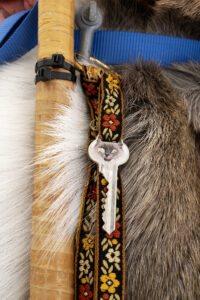
Olof Marsja, The Nameless One (detail), 2026 (Alder, oak, walnut, silvered glass, glass, plastic beads, plastic toy, natural dyed curtain fabric, felt fabric, grey t-shirt, unknown army shirt, sweatpants, denim trousers, cable tie, ratchet strap, Nike Gore-Tex sneakers, reindeer fur, steel, jesmonite, dried porcino, foam rubber, bluetooth speaker, synthetic lasso, birch trumpet, 1646 socks, Cora Hillebrand patch, Jack Wolfskin backpack, green finch head, brass and stainless steel rings, 210 x 84 x 126 cm).
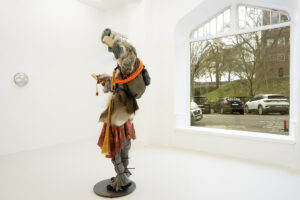
Olof Marsja, The Nameless One installation view.
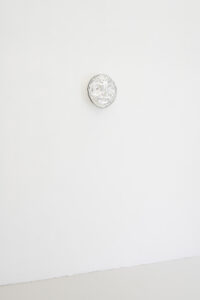
Olof Marsja, Moon Mask, 2026 (Silvered glass, aluminium, 30 x 29 x 16 cm).
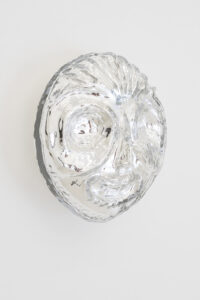
Olof Marsja, Moon Mask, 2026 (Silvered glass, aluminium, 30 x 29 x 16 cm).
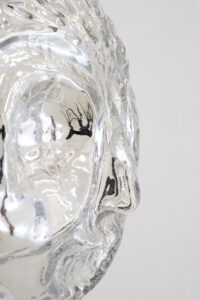
Olof Marsja, Moon Mask (detail), 2026 (Silvered glass, aluminium, 30 x 29 x 16 cm).
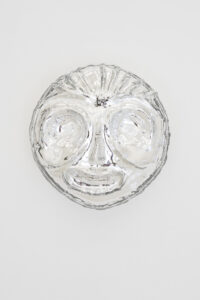
Olof Marsja, Moon Mask, 2026 (Silvered glass, aluminium, 30 x 29 x 16 cm).
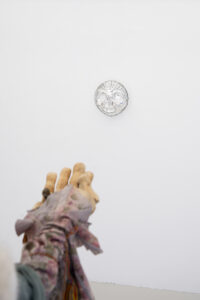
Olof Marsja, The Nameless One installation view.
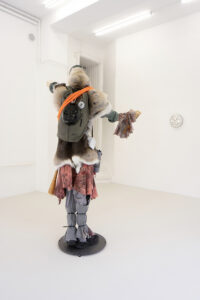
Olof Marsja, The Nameless One installation view.
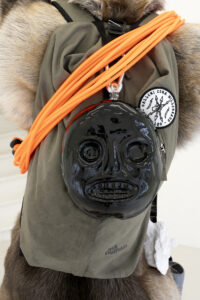
Olof Marsja, The Nameless One (detail), 2026 (Alder, oak, walnut, silvered glass, glass, plastic beads, plastic toy, natural dyed curtain fabric, felt fabric, grey t-shirt, unknown army shirt, sweatpants, denim trousers, cable tie, ratchet strap, Nike Gore-Tex sneakers, reindeer fur, steel, jesmonite, dried porcino, foam rubber, bluetooth speaker, synthetic lasso, birch trumpet, 1646 socks, Cora Hillebrand patch, Jack Wolfskin backpack, green finch head, brass and stainless steel rings, 210 x 84 x 126 cm).
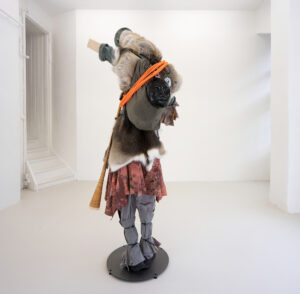
Olof Marsja, The Nameless One, 2026 (Alder, oak, walnut, silvered glass, glass, plastic beads, plastic toy, natural dyed curtain fabric, felt fabric, grey t-shirt, unknown army shirt, sweatpants, denim trousers, cable tie, ratchet strap, Nike Gore-Tex sneakers, reindeer fur, steel, jesmonite, dried porcino, foam rubber, bluetooth speaker, synthetic lasso, birch trumpet, 1646 socks, Cora Hillebrand patch, Jack Wolfskin backpack, green finch head, brass and stainless steel rings, 210 x 84 x 126 cm).
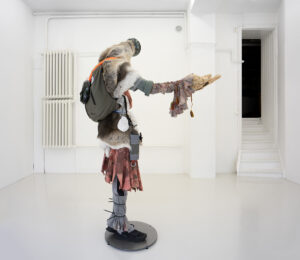
Olof Marsja, The Nameless One, 2026 (Alder, oak, walnut, silvered glass, glass, plastic beads, plastic toy, natural dyed curtain fabric, felt fabric, grey t-shirt, unknown army shirt, sweatpants, denim trousers, cable tie, ratchet strap, Nike Gore-Tex sneakers, reindeer fur, steel, jesmonite, dried porcino, foam rubber, bluetooth speaker, synthetic lasso, birch trumpet, 1646 socks, Cora Hillebrand patch, Jack Wolfskin backpack, green finch head, brass and stainless steel rings, 210 x 84 x 126 cm).
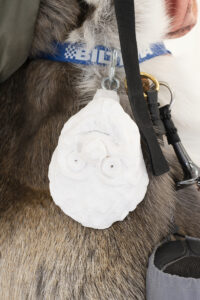
Olof Marsja, The Nameless One (detail), 2026 (Alder, oak, walnut, silvered glass, glass, plastic beads, plastic toy, natural dyed curtain fabric, felt fabric, grey t-shirt, unknown army shirt, sweatpants, denim trousers, cable tie, ratchet strap, Nike Gore-Tex sneakers, reindeer fur, steel, jesmonite, dried porcino, foam rubber, bluetooth speaker, synthetic lasso, birch trumpet, 1646 socks, Cora Hillebrand patch, Jack Wolfskin backpack, green finch head, brass and stainless steel rings, 210 x 84 x 126 cm).
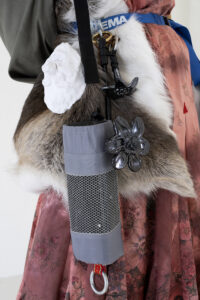
Olof Marsja, The Nameless One (detail), 2026 (Alder, oak, walnut, silvered glass, glass, plastic beads, plastic toy, natural dyed curtain fabric, felt fabric, grey t-shirt, unknown army shirt, sweatpants, denim trousers, cable tie, ratchet strap, Nike Gore-Tex sneakers, reindeer fur, steel, jesmonite, dried porcino, foam rubber, bluetooth speaker, synthetic lasso, birch trumpet, 1646 socks, Cora Hillebrand patch, Jack Wolfskin backpack, green finch head, brass and stainless steel rings, 210 x 84 x 126 cm).
Olof Marsja, The Nameless One installation view.
Olof Marsja, The Nameless One installation view.
Olof Marsja, The Nameless One, 2026 (Alder, oak, walnut, silvered glass, glass, plastic beads, plastic toy, natural dyed curtain fabric, felt fabric, grey t-shirt, unknown army shirt, sweatpants, denim trousers, cable tie, ratchet strap, Nike Gore-Tex sneakers, reindeer fur, steel, jesmonite, dried porcino, foam rubber, bluetooth speaker, synthetic lasso, birch trumpet, 1646 socks, Cora Hillebrand patch, Jack Wolfskin backpack, green finch head, brass and stainless steel rings, 210 x 84 x 126 cm).
Olof Marsja, The Nameless One, 2026 (Alder, oak, walnut, silvered glass, glass, plastic beads, plastic toy, natural dyed curtain fabric, felt fabric, grey t-shirt, unknown army shirt, sweatpants, denim trousers, cable tie, ratchet strap, Nike Gore-Tex sneakers, reindeer fur, steel, jesmonite, dried porcino, foam rubber, bluetooth speaker, synthetic lasso, birch trumpet, 1646 socks, Cora Hillebrand patch, Jack Wolfskin backpack, green finch head, brass and stainless steel rings, 210 x 84 x 126 cm).
Olof Marsja, The Nameless One (detail), 2026 (Alder, oak, walnut, silvered glass, glass, plastic beads, plastic toy, natural dyed curtain fabric, felt fabric, grey t-shirt, unknown army shirt, sweatpants, denim trousers, cable tie, ratchet strap, Nike Gore-Tex sneakers, reindeer fur, steel, jesmonite, dried porcino, foam rubber, bluetooth speaker, synthetic lasso, birch trumpet, 1646 socks, Cora Hillebrand patch, Jack Wolfskin backpack, green finch head, brass and stainless steel rings, 210 x 84 x 126 cm).
Olof Marsja, The Nameless One (detail), 2026 (Alder, oak, walnut, silvered glass, glass, plastic beads, plastic toy, natural dyed curtain fabric, felt fabric, grey t-shirt, unknown army shirt, sweatpants, denim trousers, cable tie, ratchet strap, Nike Gore-Tex sneakers, reindeer fur, steel, jesmonite, dried porcino, foam rubber, bluetooth speaker, synthetic lasso, birch trumpet, 1646 socks, Cora Hillebrand patch, Jack Wolfskin backpack, green finch head, brass and stainless steel rings, 210 x 84 x 126 cm).
Olof Marsja, The Nameless One installation view.
Olof Marsja, Sun Mask, 2026 (Silvered glass, aluminium, 30 x 29 x 16 cm).
Olof Marsja, Sun Mask, 2026 (Silvered glass, aluminium, 30 x 29 x 16 cm).
Olof Marsja, Sun Mask (detail), 2026 (Silvered glass, aluminium, 30 x 29 x 16 cm).
Olof Marsja, Sun Mask, 2026 (Silvered glass, aluminium, 30 x 29 x 16 cm).
Olof Marsja, The Nameless One installation view.
Olof Marsja, The Nameless One (detail), 2026 (Alder, oak, walnut, silvered glass, glass, plastic beads, plastic toy, natural dyed curtain fabric, felt fabric, grey t-shirt, unknown army shirt, sweatpants, denim trousers, cable tie, ratchet strap, Nike Gore-Tex sneakers, reindeer fur, steel, jesmonite, dried porcino, foam rubber, bluetooth speaker, synthetic lasso, birch trumpet, 1646 socks, Cora Hillebrand patch, Jack Wolfskin backpack, green finch head, brass and stainless steel rings, 210 x 84 x 126 cm).
Olof Marsja, The Nameless One, 2026 (Alder, oak, walnut, silvered glass, glass, plastic beads, plastic toy, natural dyed curtain fabric, felt fabric, grey t-shirt, unknown army shirt, sweatpants, denim trousers, cable tie, ratchet strap, Nike Gore-Tex sneakers, reindeer fur, steel, jesmonite, dried porcino, foam rubber, bluetooth speaker, synthetic lasso, birch trumpet, 1646 socks, Cora Hillebrand patch, Jack Wolfskin backpack, green finch head, brass and stainless steel rings, 210 x 84 x 126 cm).
Olof Marsja, The Nameless One (detail), 2026 (Alder, oak, walnut, silvered glass, glass, plastic beads, plastic toy, natural dyed curtain fabric, felt fabric, grey t-shirt, unknown army shirt, sweatpants, denim trousers, cable tie, ratchet strap, Nike Gore-Tex sneakers, reindeer fur, steel, jesmonite, dried porcino, foam rubber, bluetooth speaker, synthetic lasso, birch trumpet, 1646 socks, Cora Hillebrand patch, Jack Wolfskin backpack, green finch head, brass and stainless steel rings, 210 x 84 x 126 cm).
Olof Marsja, The Nameless One (detail), 2026 (Alder, oak, walnut, silvered glass, glass, plastic beads, plastic toy, natural dyed curtain fabric, felt fabric, grey t-shirt, unknown army shirt, sweatpants, denim trousers, cable tie, ratchet strap, Nike Gore-Tex sneakers, reindeer fur, steel, jesmonite, dried porcino, foam rubber, bluetooth speaker, synthetic lasso, birch trumpet, 1646 socks, Cora Hillebrand patch, Jack Wolfskin backpack, green finch head, brass and stainless steel rings, 210 x 84 x 126 cm).
Olof Marsja, The Nameless One installation view.
Olof Marsja, Moon Mask, 2026 (Silvered glass, aluminium, 30 x 29 x 16 cm).
Olof Marsja, Moon Mask, 2026 (Silvered glass, aluminium, 30 x 29 x 16 cm).
Olof Marsja, Moon Mask (detail), 2026 (Silvered glass, aluminium, 30 x 29 x 16 cm).
Olof Marsja, Moon Mask, 2026 (Silvered glass, aluminium, 30 x 29 x 16 cm).
Olof Marsja, The Nameless One installation view.
Olof Marsja, The Nameless One installation view.
Olof Marsja, The Nameless One (detail), 2026 (Alder, oak, walnut, silvered glass, glass, plastic beads, plastic toy, natural dyed curtain fabric, felt fabric, grey t-shirt, unknown army shirt, sweatpants, denim trousers, cable tie, ratchet strap, Nike Gore-Tex sneakers, reindeer fur, steel, jesmonite, dried porcino, foam rubber, bluetooth speaker, synthetic lasso, birch trumpet, 1646 socks, Cora Hillebrand patch, Jack Wolfskin backpack, green finch head, brass and stainless steel rings, 210 x 84 x 126 cm).
Olof Marsja, The Nameless One, 2026 (Alder, oak, walnut, silvered glass, glass, plastic beads, plastic toy, natural dyed curtain fabric, felt fabric, grey t-shirt, unknown army shirt, sweatpants, denim trousers, cable tie, ratchet strap, Nike Gore-Tex sneakers, reindeer fur, steel, jesmonite, dried porcino, foam rubber, bluetooth speaker, synthetic lasso, birch trumpet, 1646 socks, Cora Hillebrand patch, Jack Wolfskin backpack, green finch head, brass and stainless steel rings, 210 x 84 x 126 cm).
Olof Marsja, The Nameless One, 2026 (Alder, oak, walnut, silvered glass, glass, plastic beads, plastic toy, natural dyed curtain fabric, felt fabric, grey t-shirt, unknown army shirt, sweatpants, denim trousers, cable tie, ratchet strap, Nike Gore-Tex sneakers, reindeer fur, steel, jesmonite, dried porcino, foam rubber, bluetooth speaker, synthetic lasso, birch trumpet, 1646 socks, Cora Hillebrand patch, Jack Wolfskin backpack, green finch head, brass and stainless steel rings, 210 x 84 x 126 cm).
Olof Marsja, The Nameless One (detail), 2026 (Alder, oak, walnut, silvered glass, glass, plastic beads, plastic toy, natural dyed curtain fabric, felt fabric, grey t-shirt, unknown army shirt, sweatpants, denim trousers, cable tie, ratchet strap, Nike Gore-Tex sneakers, reindeer fur, steel, jesmonite, dried porcino, foam rubber, bluetooth speaker, synthetic lasso, birch trumpet, 1646 socks, Cora Hillebrand patch, Jack Wolfskin backpack, green finch head, brass and stainless steel rings, 210 x 84 x 126 cm).
Olof Marsja, The Nameless One (detail), 2026 (Alder, oak, walnut, silvered glass, glass, plastic beads, plastic toy, natural dyed curtain fabric, felt fabric, grey t-shirt, unknown army shirt, sweatpants, denim trousers, cable tie, ratchet strap, Nike Gore-Tex sneakers, reindeer fur, steel, jesmonite, dried porcino, foam rubber, bluetooth speaker, synthetic lasso, birch trumpet, 1646 socks, Cora Hillebrand patch, Jack Wolfskin backpack, green finch head, brass and stainless steel rings, 210 x 84 x 126 cm).
