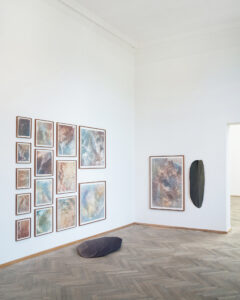
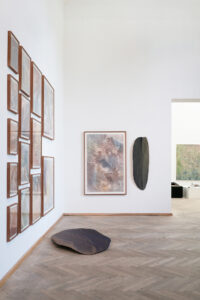
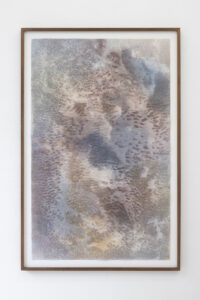
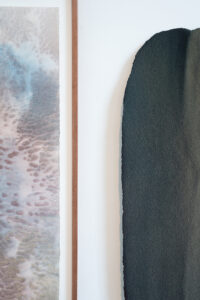
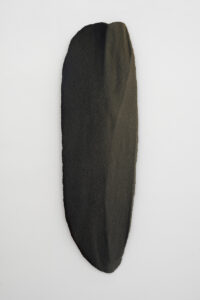
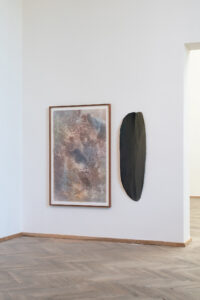
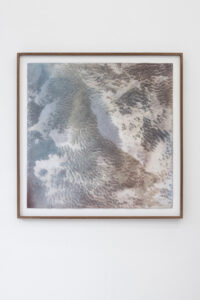
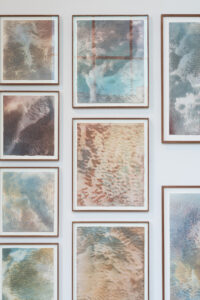
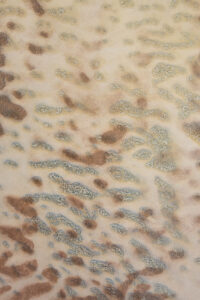
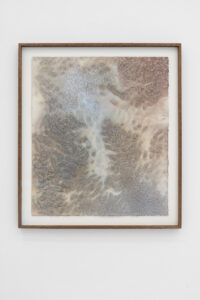
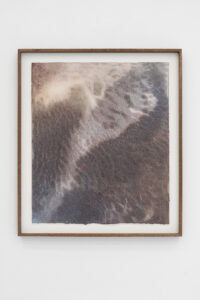
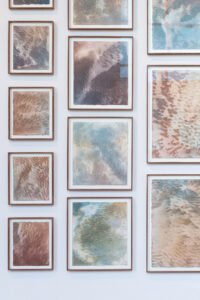
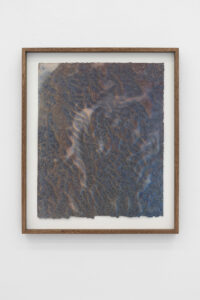
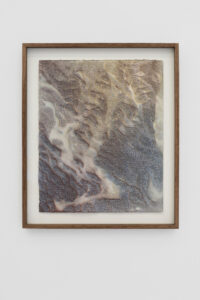
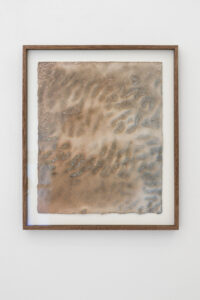
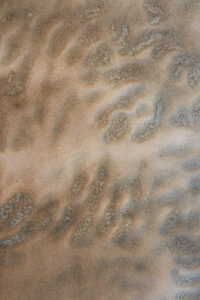
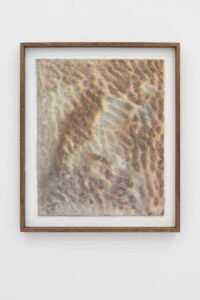
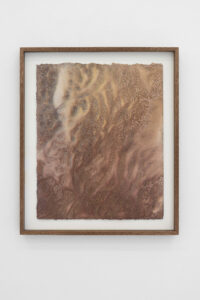
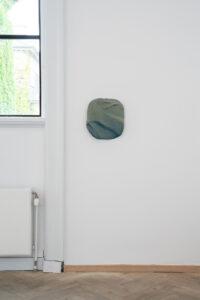
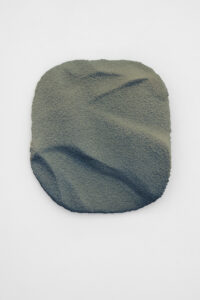
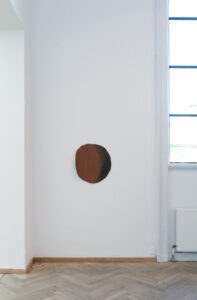
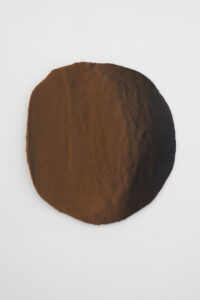
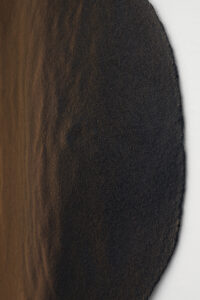
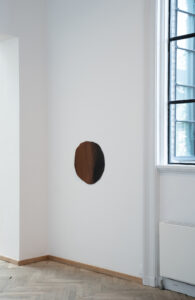
Fanny Hellgren, Parts of the Whole III, 2026 (Pigment and binder on paper, frame, 107 x 107 cm).

Fanny Hellgren
Ö
CHART Art Fair, Copenhagen (DK)
Aug 28 — 30, 2026

  • Stat rosa pristina nomine;
    nomina nuda tenemur
    Bernard of Cluny(1)

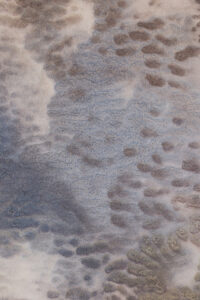
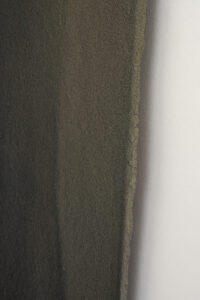
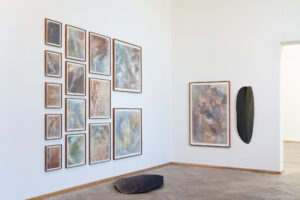
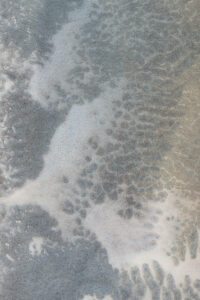
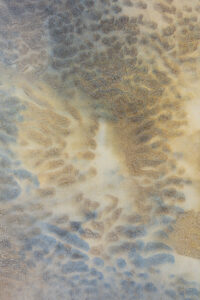
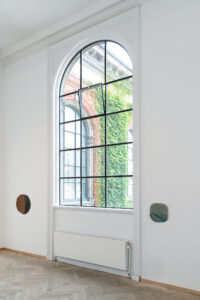
    Ö is both the last letter of the Swedish alphabet and a word itself, Island. Whimsically protruding from surfaces, puzzling in their nature and composition, fascinating in their appearance and even more when knowing how they were created, Fanny Hellgren’s sculptures often look like something unreal and otherworldly is presented in front of our eyes. Unsurprisingly the Swedish artist’s works often take the form of landscapes, and geographic metaphors have been a recurring element in her art, both intrinsically and extrinsically, as the results of her processes. But processes have been the very heart of her practice: since the start of her career Hellgren has been able to invent and put into work incredibly simple and at the same time incredibly poetic and effective solutions to transform water, sand and little else into art. The works from this show are no exceptions to this, both the sculptural and the framed ones. The sculptures are created by pouring resin over sand beds and letting it dry in the forms it takes. The papers are the result of burying watercolour paper sheets under a layer of sand and pigments, and pouring water on top of them. In this way the sand leaves its mark before being washed off the surface, which remains fixed with the pigments. In both cases Hellgren doesn’t control or manipulate the materials she uses, she instead creates the context for them to amalgamate and become art. It is a process where materials gain an incredible amount of agency, and the artist leaves to them the space and time to become the poetic and mysterious artworks we see.

    Some months ago, while discussing with a colleague about philosophy and art, she brought up the concept of riß in Heidegger, which I wasn’t familiar with and had to go and search. What I found was not only the puzzling ambivalence that makes this idea intriguing, but that it grounded itself into a quote from Albrecht Dürer, who wrote: “Art lies hidden within Nature; he who can wrestle from her, has it”.(2) I was immediately hit by the violence of this description, and even more by the gendered form in which the sentence came translated in in English. We have an He, the artist, who violently takes from a She, nature, the forms of good art. It is the description of a rape. Art, in the words of this master of the 1500s is a rape, and it comes as no surprise, but, if one thinks about it, apart from this brutal image, it is still nowadays possible to use the same metaphor and idea to describe most art forms. Art in most cases is a violent operation, it is imposing the artist’s will onto materials: stone is broken to pieces, clay is pushed and compressed, paint erases surfaces. It is a process that I would have no problems in describing as stereotypically masculine, and it is there, in that pondering that thinking about the art by Fanny Hellgren surprised me. Her art is in fact the opposite of this violent process, the artist, a woman in this case, is not wrestling anything from nature, but gently sets nature into motion. Materials and surfaces alike are invited to move and shape themselves into a process that is refreshingly (stereotypically) feminine.

    It is in this gentle and inspiring way of letting nature create these beautiful and conceptually grounded art pieces that this new series of works have been created. Ö, is eventually composed of islands, separated works and landscapes, most of them counter–intuitively named as Parts of the Whole, maintaining an idea of interconnectedness which the artist felt was important when describing the works composing this presentation. I believe they aspire to leave the same permanent yet gentle trace as sand did with their surfaces, most often disappearing and remaining only as a name, or, like Bernard of Cluny’s rose, as a beautiful trace and memory of what is no longer there anymore.

    Mattia Lullini


    (1) “Yesterday’s rose stands only in name, we hold only empty names”, a quote from the Middle Ages poet Bernard of Cluny made famous by the Italian author and semiotics professor Umberto Eco in his novel The Name of the Rose, 1980.
    (2) “Denn wahrhaftig steckt die Kunst in der Natur, wer sie heraus kann reißen, der hat sie”. Albrecht Dürer, Vier Bücher von Menschlicher Proportion, 1528.


    This exhibition was realised with the support of Kulturrådet


    Booth 20
    Kunsthal Charlottenborg
    Kongens Nytorv 1
    DK-1050 Copenhagen
    Denmark

  • Stat rosa pristina nomine;
    nomina nuda tenemur
    Bernard of Cluny(1)

    Ö is both the last letter of the Swedish alphabet and a word itself, Island. Whimsically protruding from surfaces, puzzling in their nature and composition, fascinating in their appearance and even more when knowing how they were created, Fanny Hellgren’s sculptures often look like something unreal and otherworldly is presented in front of our eyes. Unsurprisingly the Swedish artist’s works often take the form of landscapes, and geographic metaphors have been a recurring element in her art, both intrinsically and extrinsically, as the results of her processes. But processes have been the very heart of her practice: since the start of her career Hellgren has been able to invent and put into work incredibly simple and at the same time incredibly poetic and effective solutions to transform water, sand and little else into art. The works from this show are no exceptions to this, both the sculptural and the framed ones. The sculptures are created by pouring resin over sand beds and letting it dry in the forms it takes. The papers are the result of burying watercolour paper sheets under a layer of sand and pigments, and pouring water on top of them. In this way the sand leaves its mark before being washed off the surface, which remains fixed with the pigments. In both cases Hellgren doesn’t control or manipulate the materials she uses, she instead creates the context for them to amalgamate and become art. It is a process where materials gain an incredible amount of agency, and the artist leaves to them the space and time to become the poetic and mysterious artworks we see.

    Some months ago, while discussing with a colleague about philosophy and art, she brought up the concept of riß in Heidegger, which I wasn’t familiar with and had to go and search. What I found was not only the puzzling ambivalence that makes this idea intriguing, but that it grounded itself into a quote from Albrecht Dürer, who wrote: “Art lies hidden within Nature; he who can wrestle from her, has it”.(2) I was immediately hit by the violence of this description, and even more by the gendered form in which the sentence came translated in in English. We have an He, the artist, who violently takes from a She, nature, the forms of good art. It is the description of a rape. Art, in the words of this master of the 1500s is a rape, and it comes as no surprise, but, if one thinks about it, apart from this brutal image, it is still nowadays possible to use the same metaphor and idea to describe most art forms. Art in most cases is a violent operation, it is imposing the artist’s will onto materials: stone is broken to pieces, clay is pushed and compressed, paint erases surfaces. It is a process that I would have no problems in describing as stereotypically masculine, and it is there, in that pondering that thinking about the art by Fanny Hellgren surprised me. Her art is in fact the opposite of this violent process, the artist, a woman in this case, is not wrestling anything from nature, but gently sets nature into motion. Materials and surfaces alike are invited to move and shape themselves into a process that is refreshingly (stereotypically) feminine.

    It is in this gentle and inspiring way of letting nature create these beautiful and conceptually grounded art pieces that this new series of works have been created. Ö, is eventually composed of islands, separated works and landscapes, most of them counter–intuitively named as Parts of the Whole, maintaining an idea of interconnectedness which the artist felt was important when describing the works composing this presentation. I believe they aspire to leave the same permanent yet gentle trace as sand did with their surfaces, most often disappearing and remaining only as a name, or, like Bernard of Cluny’s rose, as a beautiful trace and memory of what is no longer there anymore.

    Mattia Lullini


    (1) “Yesterday’s rose stands only in name, we hold only empty names”, a quote from the Middle Ages poet Bernard of Cluny made famous by the Italian author and semiotics professor Umberto Eco in his novel The Name of the Rose, 1980.
    (2) “Denn wahrhaftig steckt die Kunst in der Natur, wer sie heraus kann reißen, der hat sie”. Albrecht Dürer, Vier Bücher von Menschlicher Proportion, 1528.


    This exhibition was realised with the support of Kulturrådet


    Booth 20
    Kunsthal Charlottenborg
    Kongens Nytorv 1
    DK-1050 Copenhagen
    Denmark

To top